
I’m not sure when it started or how it became accepted, but at some point asking a husband to help around the house, with the kids, or with everyday tasks began to be labeled as “nagging.”
That word bothers me. Nagging. It paints a picture of an angry, shrill woman waving her hands while a man shirks responsibility. The image is unhelpful and insulting, reducing real household needs and parenting duties to mere irritation rather than legitimate shared responsibilities.
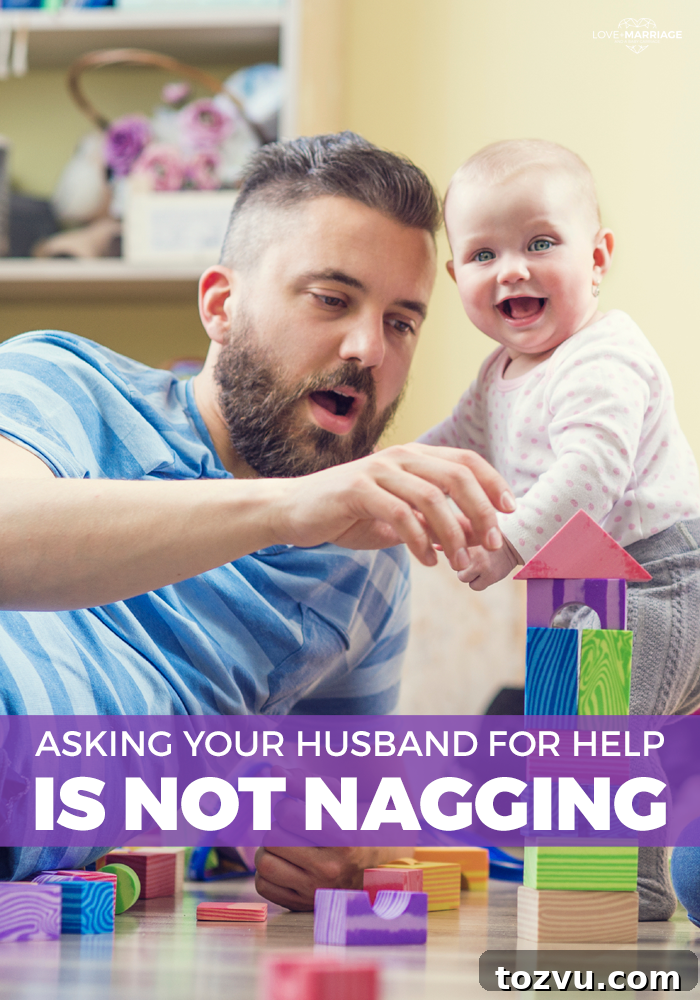
That stereotype implies we are complaining about trivial things or seeking attention, when often we are simply asking for help so we can keep our homes running and our families cared for. Expecting your partner to carry his share of the load is not petty. It’s practical, fair, and essential for a healthy household.
There’s a vast difference between persistent, hostile criticism and calm, direct requests for assistance. Most caregivers — particularly mothers who do a large share of everyday child care and home management — would prefer not to repeatedly ask for help. We would rather our partners notice the laundry that needs folding, the dishes in the sink, or the baby who needs a diaper change. But people notice and prioritize different things, and that’s part of why reminders are sometimes necessary.
Men and women can experience the same environment differently. We don’t all have the same instincts, sensory cues, or mental checklists when it comes to domestic tasks. A crying baby may register immediately for a parent who has been more attuned to nighttime awakenings, but may not register the same way for the partner who slept more deeply. A cluttered counter that signals “clean me” to one person may simply blend into the background for another. That doesn’t mean one person is lazy or uncaring — it often means that habits and attention differ.
It’s important to reframe how we ask for help. Saying, “I’m exhausted and could really use a nap; can you prepare lunch and play with the kids for a bit?” is not nagging. It’s communicating a need and offering a specific request. Clear, calm communication makes it easier for the other person to respond constructively. Instead of expecting your spouse to read your mind, give a practical task and a small window of time, and you’ll get much further.
We shouldn’t let the fear of being called a “nagging wife” stop us from setting boundaries or asking for support. In many relationships, that label stuck because it was easier to accept the stereotype than to change patterns of division of labor. But relinquishing our voice for fear of a label only creates imbalance, resentment, and burnout.
There’s also a big difference between complaining out of frustration and inviting partnership. A helpful approach is to combine appreciation with a request: acknowledge what your partner does well and then ask for help where you need it. For example, “I appreciate how you handle bedtime some nights. Tonight I really need you to take bottles while I rest—can you do that?” Specific, respectful requests reduce friction and make cooperation more likely.
Reminders are not inherently nagging. They are part of coordinating a household with another person who has different strengths, routines, and sensory awareness. Asking for help is a practical skill that protects your energy and improves family life. It paves the way for shared responsibility and prevents one partner from shouldering an unfair burden.
Do you feel like you’ve fallen out of love with your spouse and wish you knew how to get it back?
If you’re looking for structured ways to reconnect and rebuild closeness, consider small, consistent actions that create space for partnership, rest, and mutual appreciation. Simple changes—clear requests, small acts of help, and honest conversations about needs—can lead to meaningful improvements in both practical day-to-day life and emotional intimacy.

Asking for help from your partner is not nagging. It is communication, boundary-setting, and an essential part of building an equitable household. Voice your needs clearly and kindly; you deserve support, and your family will benefit when both partners share the responsibilities of daily life.