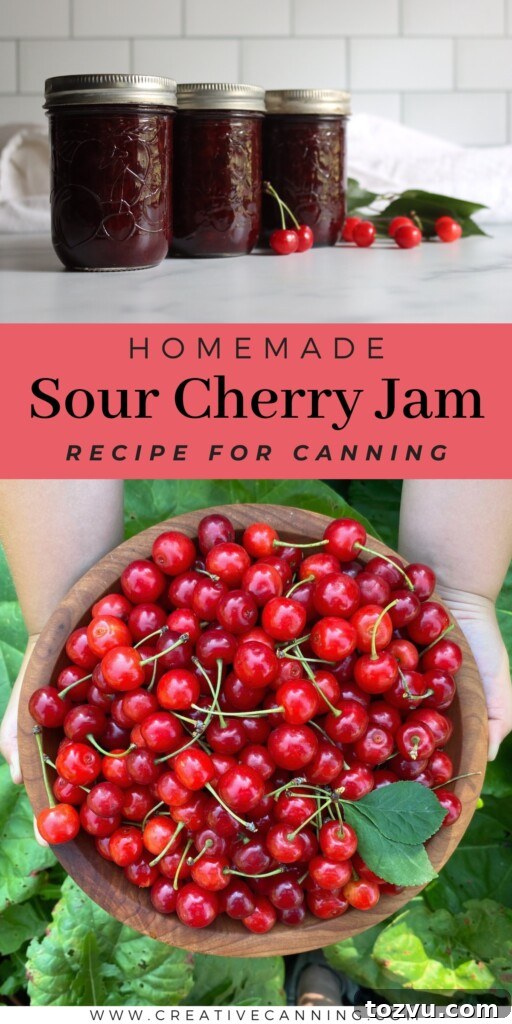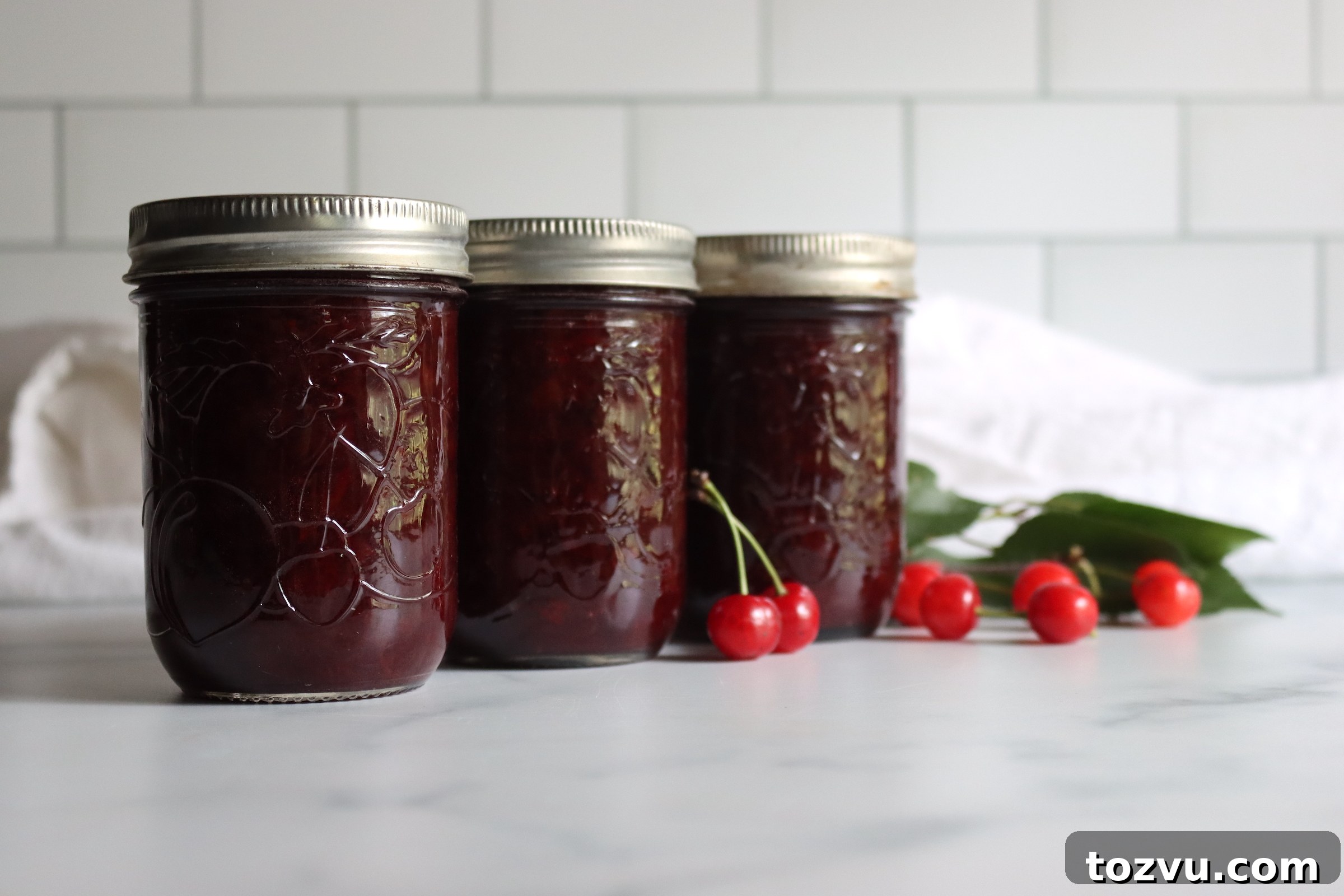
Sour cherry jam captures the bright, fresh flavor of farm-picked sour cherries. Often called pie cherries or tart cherries, these small fruits are too tart to eat straight from the tree but transform into a wonderfully balanced jam with a touch of sugar.
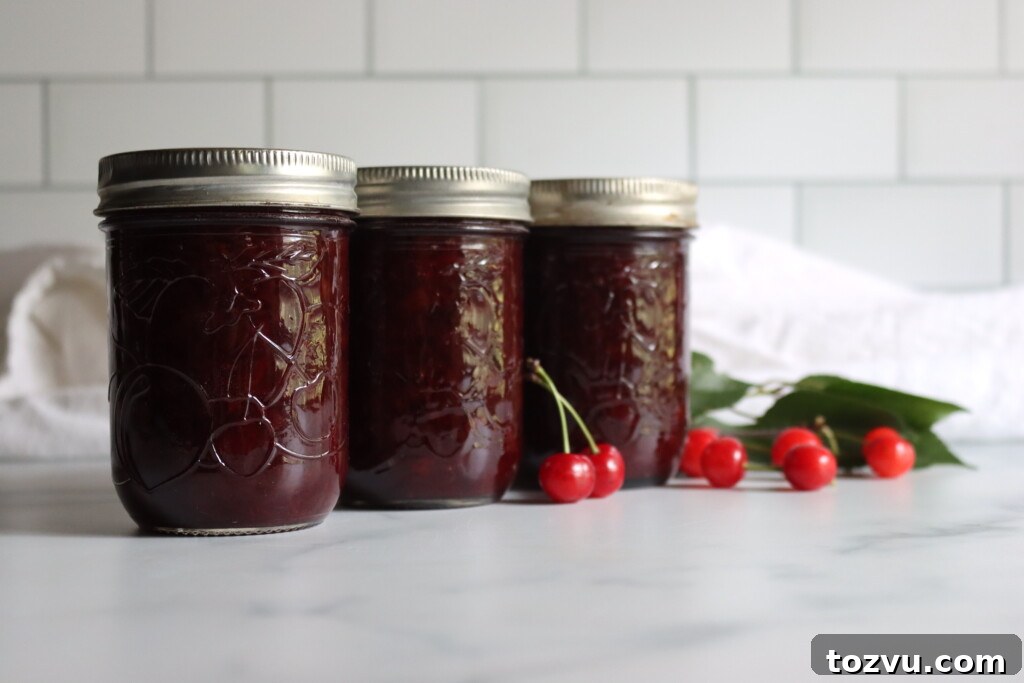
Sour cherry jam is deceptively mellow — tart cherries mellow with sugar into a jam that is bright, tangy, and deeply cherry-forward. These cherries have a truer cherry flavor than many sweet cherry varieties, and their acidity helps produce a jam with excellent structure and clarity of flavor.
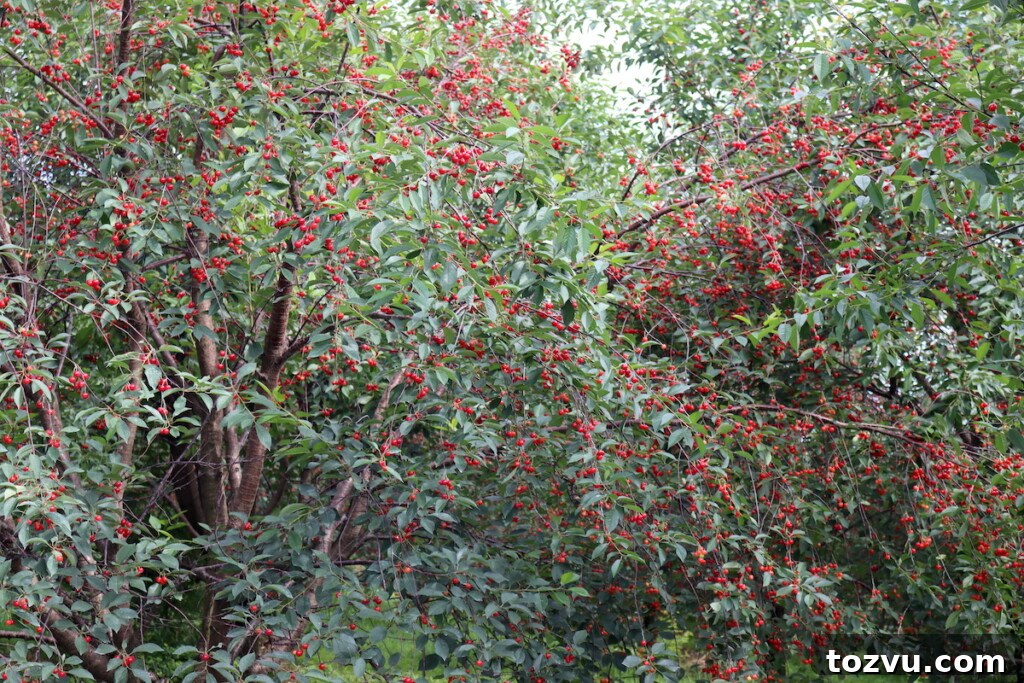
On our homestead we grow sour cherries and always look forward to the season. Fresh-picked cherries make the best jam, but you can also use frozen cherries if necessary. When fresh cherries are available, it’s a good idea to make both jam and a jar of pie filling to enjoy later in the year.
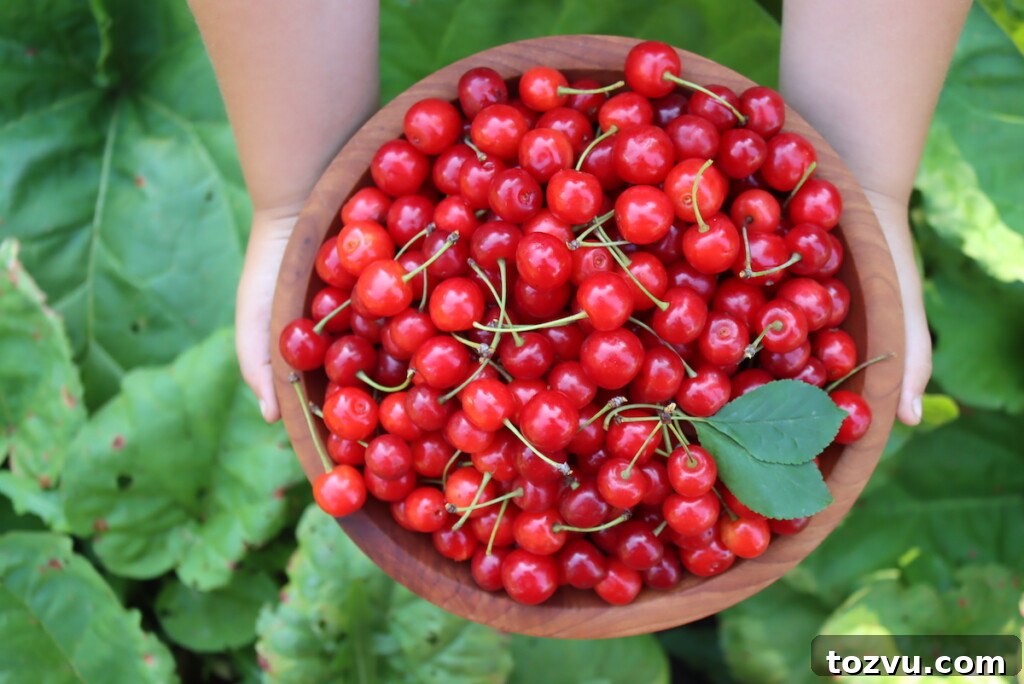
Sour cherries are fragile in transit, so they aren’t always easy to find in supermarkets. If you can find a local “pick-your-own” orchard or grow your own trees, you’ll get the freshest fruit for canning. Because of their tartness, sour cherries are better suited to preservation — freezing, canning, or making jam — than to eating raw.
Ingredients for Sour Cherry Jam
This batch yields about two half-pint jars. You can double the recipe, but try not to cook more than 10 cups of fruit at once—very large batches may not heat evenly and can have trouble setting.
- 3 lbs fresh sour cherries (about 2½ lbs pitted or roughly 5 cups pitted)
- Juice of 1 lemon (about 2 tablespoons)
- 2 cups granulated sugar (increase to 3 cups if you prefer a sweeter preserve)
I prefer not to use commercial pectin. Instead, lemon juice and a slightly longer cooking time allow the jam to gel naturally while intensifying the cherry flavor. The result is a thick, concentrated jam with an authentic texture — not overly jelly-like.
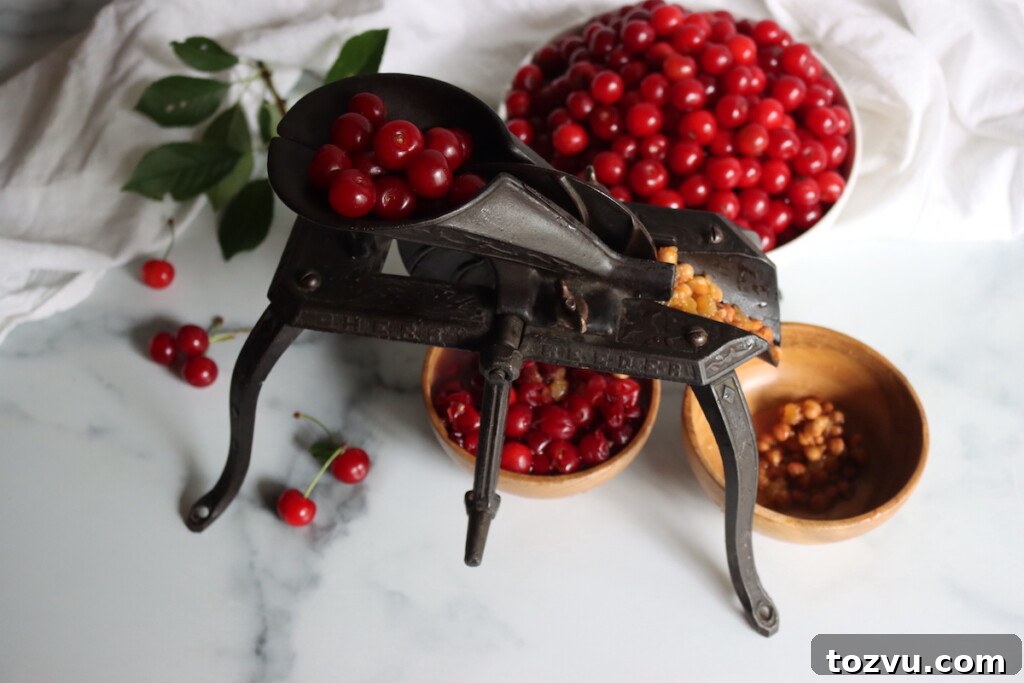
For pitting the cherries, a small handheld pitter works fine for modest batches. For larger amounts, a sturdy antique or cast-iron pitter can speed the work if your cherries are soft enough. Very large, firm sweet cherries may not fit older pitters, so test yours before relying on it for a big batch.
How to Make Sour Cherry Jam
1. Pit the cherries and place them in a large, heavy-bottomed pot. Because this jam produces a fair amount of foam, use a pot with deep sides so the fruit fills only about one-third to one-half of the pot at the start.
2. Add the lemon juice to the cherries and heat over medium-high. Stir occasionally until the cherries reach a full boil, then reduce the heat and simmer for about 20 minutes, stirring frequently. The fruit will break down and release juice.
3. Add the sugar and stir until it dissolves. Continue cooking without pectin for another 25–30 minutes, stirring often to prevent scorching. The mixture will thicken as water evaporates and the fruit concentrates.
4. To test for gel, chill a small plate in the freezer, place a spoonful of jam on the plate, and return it to the freezer for one minute. If the surface wrinkles when you run your finger through it, the jam has reached gel stage. An alternative is an instant-read thermometer: the jam is generally ready at about 220°F at sea level (adjust slightly lower at higher elevations).
5. When the jam is ready, remove the pot from the heat and carefully ladle hot jam into sterilized jars, leaving about 1/4 inch headspace. Remove air bubbles, wipe the rims clean, and apply lids and bands.
Canning Sour Cherry Jam
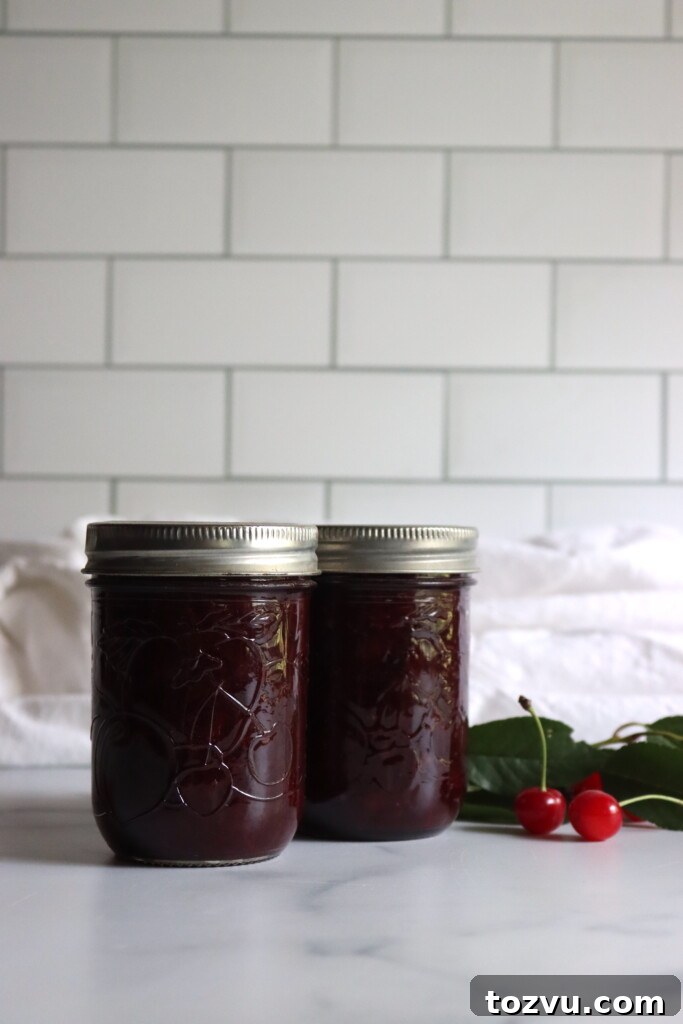
Process the filled jars in a boiling water bath for 10 minutes (increase to 15 minutes if you are above 6,000 feet elevation). This ensures a reliable seal and makes the jars shelf-stable. If you plan to use the jam within a few weeks, you can skip the water bath and refrigerate instead.
Let jars cool completely, then check seals. Unsealed jars should be refrigerated and used first. Properly sealed jars can be stored in a cool, dark place for up to a year. Once opened, keep the jam refrigerated and use within a month.
Tips for the Perfect Preserve
- Adjust sweetness: The recipe calls for 2 cups of sugar for balanced tartness. Increase to 3 cups for a sweeter jam.
- Pectin option: If you want a quicker, more predictable set, add commercial pectin. Follow the pectin package instructions and adjust lemon juice and sugar as recommended by the pectin manufacturer.
- Altitude: At higher elevations the boiling point of water is lower; you may need to cook the jam a few minutes longer. As a rule, add about 5 minutes of cooking time for each 1,000 feet above sea level.
Why Make Sour Cherry Jam Without Pectin?
Making jam without commercial pectin produces a more concentrated, full-bodied cherry flavor. Slow cooking concentrates the fruit and creates a natural, slightly rustic texture that many people prefer. It takes a bit more attention at the stove, but the deep cherry flavor and smooth, spoonable set are worth the effort.
Servings: 2 half-pint jars
Prep: 15 mins | Cook: 45 mins | Canning time: 10 mins | Total: ~1 hr 10 mins
Ingredients
- 3 lbs sour cherries, pitted (about 2½ lbs pitted or 5 cups)
- 2 tbsp lemon juice (fresh or bottled)
- 2 cups sugar
Instructions
- Pit and prepare cherries. Place in a heavy-bottomed pot with lemon juice.
- Bring to a boil, reduce heat, and simmer for 20 minutes, stirring frequently.
- Add sugar, stir to dissolve, and continue cooking 25–30 minutes until the jam thickens.
- Test for gel on a chilled plate or with an instant-read thermometer (about 220°F at sea level; adjust for elevation).
- Ladle into sterilized jars, leaving 1/4 inch headspace. Remove bubbles and wipe rims.
- If canning, process jars in a boiling water bath for 10 minutes (15 minutes above 6,000 ft). Let cool, check seals, and store.
Notes
Three pounds of cherries is approximately 2½ pounds pitted, or about 5 cups of pitted fruit. Nutrition info and serving sizes are approximate.