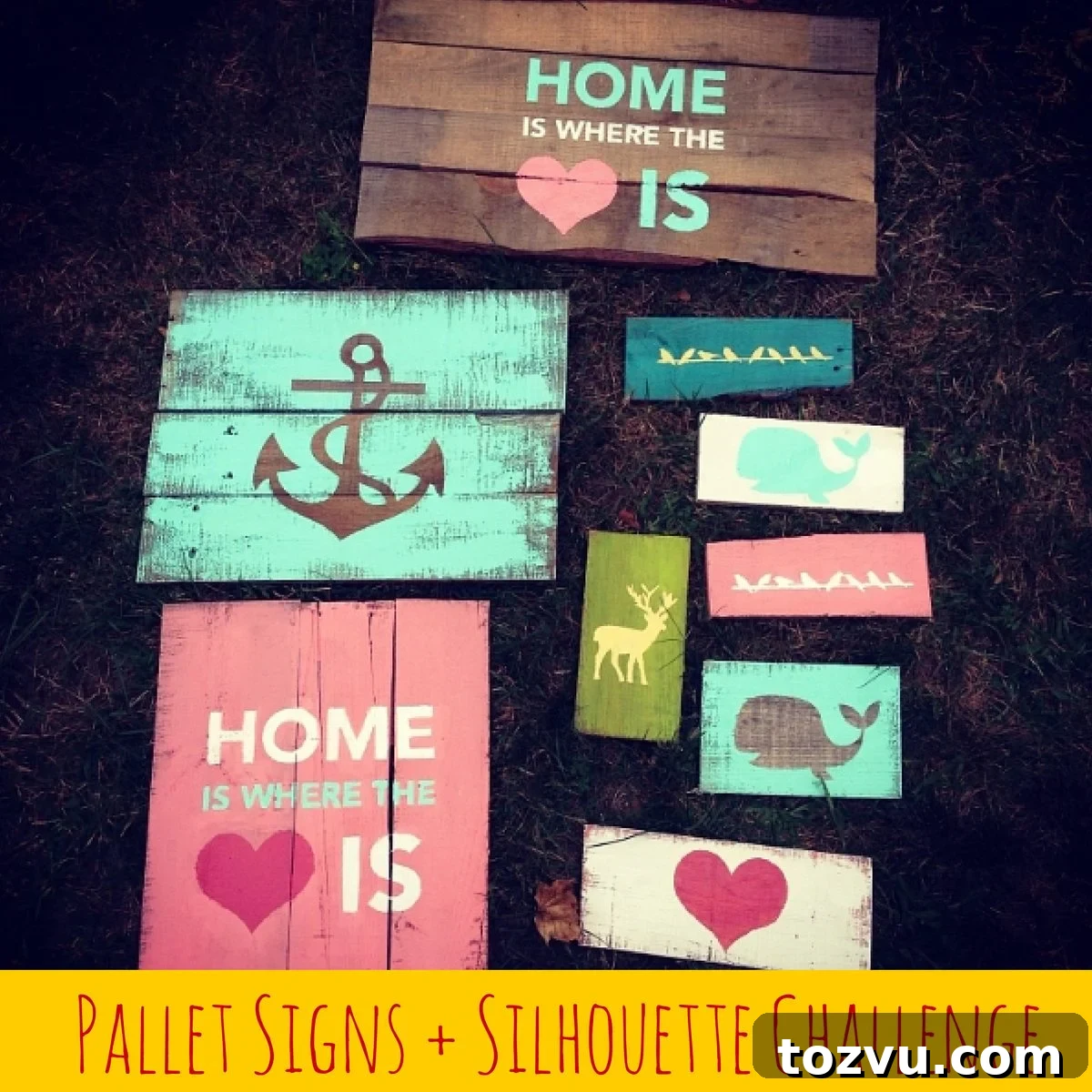
It’s that time again — Silhouette Challenge time! This month’s theme focused on home decor, which is perfect since I recently moved into a new house. Believe it or not, I don’t have anything hanging on my walls yet because I haven’t settled on a consistent style. With two big events approaching — the Signature Finishes opening and Brimfield — I decided to make several pallet signs to sell. I’m sharing the process and tips here to help you create your own.
I’ve become somewhat obsessed with making signs. Choosing the right saying or image and then painting it by hand feels like a satisfying counterpoint to my day job, which is mostly computer work. Working with paint and tools is therapeutic and gives me a creative outlet that’s hands-on and tactile.
I begin by breaking pallets down into usable pieces. Once the pallet is disassembled, I lay out the boards and choose pieces that visually fit together. Then I trim them to a manageable size. For anyone who dismantles pallets often, there are specialized tools such as a Pallet Buster and a Deck Wrecker that make the job easier — they’re worth considering if you want to avoid using a crowbar and hammer repeatedly.
After cutting the boards, I use scrap pieces as the backing or support for the sign. Tip: when attaching the support pieces, avoid driving nails straight in. Instead, nail at an angle and alternate angles for adjacent nails. This technique helps prevent the support from working loose over time or if a sign is accidentally dropped. I learned this the hard way when a backing that had been nailed straight eventually came off.
When preparing vinyl stencils, I find the most reliable results when cutting on a cutting mat. For pallet projects, a larger cutting mat — for example, a 12×24 — is handy because it accommodates wider designs. The larger mat does require extra workspace; you’ll need enough room on your work table to feed the mat through your cutting machine comfortably. Despite the space requirement, the wider mat gets used frequently once you start making larger pieces.
There are two main approaches to applying paint with vinyl stencils on wood: paint the wood first and then stencil over it, or lay down the vinyl stencil and paint directly through it. I use both methods depending on the effect I want. Often I hand-place the vinyl so I can reuse the negative cut as a second stencil; this stretches the value of each cut and reduces material cost. For example, if you cut a deer silhouette, you can use both the deer shape and the leftover material as separate stencils.
When producing multiple signs, efficiency helps. I lay out all the vinyl pieces on the wood first and then paint them all at once, which speeds up the process and ensures consistency in color and finish across the batch. For painting, a small one-inch brush works well. Be careful not to overload the brush with paint — a light application produces crisper edges when using a stencil. If needed, you can add a second coat after the first layer dries. Typically paint dries in 20–30 minutes; once dry, peel back the vinyl carefully. You may need a few touch-ups, but with patience you’ll get clean, crisp lines.
Beyond the basics, you can experiment with distressing, layering colors, or combining stencils for more complex graphics and typography. Weathered finishes and subtle sanding can help the sign look authentically reclaimed if that’s the aesthetic you prefer. If selling at craft fairs or displays, consider creating a variety of sizes and sayings to appeal to different tastes — seasonal phrases, simple words, or minimalist icons can be popular.
Love this project? Save it for later.
Want to Check Out More Silhouette Projects?
On the day of the Silhouette Challenge, many creative bloggers share their projects. If you enjoy this type of project, seek out other makers who post similar tutorials for more inspiration. Seeing different approaches to stenciling, painting, and finishing can spark new ideas and techniques to try on your own signs.
Note: Some tools and products mentioned here may be available from various retailers. If you choose to purchase accessories or cutting materials, select reputable sources and read reviews to find the best tools for your needs.