Two-Tier Cake: A Lesson in Minimalist Decorating
Day twenty marked the final assignment of module five: cover and decorate a two-tier cake. I arrived with a clear vision—an elegant presentation with a large bow on top and delicate frills cascading down the sides. I had rehearsed the techniques in my head and was excited to put the plan into practice. But as often happens in baking, things didn’t go exactly to plan.
Despite the strong concept, several small setbacks slowed me down. The first attempt didn’t sit right—proportions felt off and the bow looked heavy against the cake’s profile. I adjusted the design, but the second iteration revealed uneven edges and a frill placement that distracted from the overall silhouette. Time began to slip away as I made those corrections and second-guessed choices. By the third attempt I realized I had to simplify to finish within the assignment window.
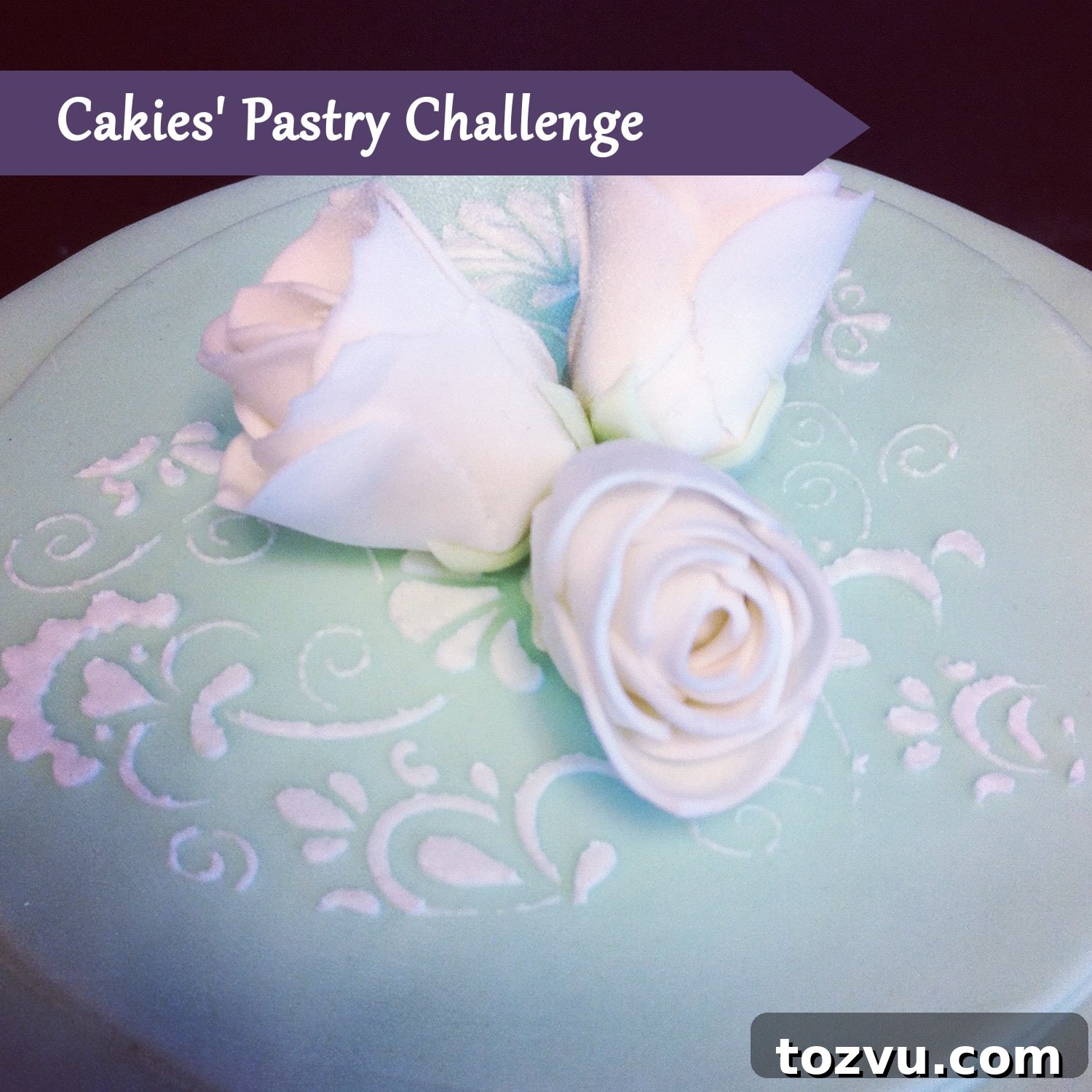
In the end I settled on a clean, restrained approach: smooth fondant covering, subtle piping along the base of each tier, and a single, neat detail to draw the eye. The result is what I now fondly call my “minimalist” cake. It’s not what I originally planned, but it highlights an important lesson about design and time management—sometimes less is more.
Minimalist designs can be powerful because they emphasize form, texture, and proportion rather than an abundance of adornment. For this cake I focused on three fundamentals:
- Smooth finish: A well-smoothed fondant or buttercream surface immediately elevates a cake’s appearance and creates a clean canvas for any small detail.
- Balanced accents: One carefully chosen accent—such as a subtle piping border, a small sugar detail, or a single ribbon—can create a focal point without overwhelming the design.
- Proportion and scale: On a two-tier cake, the relationship between the tiers and the final decoration is crucial. I adjusted the scale of the embellishment to complement the cake rather than compete with it.
Although my original idea of a large bow and elaborate frills was shelved, I didn’t consider the day a failure. It was a practical exercise in problem solving. I learned to prioritize what was achievable in the time available and to accept a simpler outcome that still looks polished. For anyone learning cake decorating, that adaptability is essential; real-world assignments rarely go exactly as rehearsed.
If you’re attempting a two-tier cover-and-decorate assignment, here are a few tips that helped me recover and finish confidently:
- Plan your major elements first, then add smaller details only if time allows.
- Practice bows and frills separately before attaching them to the cake so you know how they behave.
- Keep tools and materials organized to save minutes when you need them most.
- If something isn’t working, step back for a moment—sometimes a short break clears the mind and reduces rushed mistakes.
At the close of the day, I found satisfaction in the minimalist outcome. It’s a reminder that restraint can be a design choice, not a compromise. I’m already thinking about how I would evolve the concept with more time: perhaps a delicate hand-painted flourish, a small cluster of sugar flowers, or a refined textural element on the lower tier. For now, this cake stands as a clean, simple piece that served its purpose for the assignment and taught me valuable lessons about planning, execution, and creative flexibility.