Have you ever wanted to make apple cider vinegar at home but felt intimidated by the unknowns? It’s easier than you might think. If people have been making vinegar from apples for centuries, you can certainly do it too. This guide walks you through the process in clear, practical steps so you can feel confident starting your own batch.
Apple cider vinegar is a simple fermentation project that relies on natural yeasts and bacteria. Start with freshly pressed or freshly extracted apple juice, keep it at a moderate temperature, and let nature do the rest.
How the Vinegar-Making Process Works
The fermentation that creates apple cider vinegar happens in two main stages. First, airborne yeasts and yeasts on the apple skins consume the sugars in the juice and convert them into alcohol. This produces a mild apple wine.
Next, acetobacter bacteria convert that alcohol into acetic acid, the compound that gives vinegar its tang and preservative qualities. Both groups of organisms are common in ordinary household environments and on fruit surfaces, so with the right conditions—clean containers, moderate temperatures, and time—apple juice will naturally transform into vinegar.
How to Make Apple Cider Vinegar
Below is a step-by-step method you can follow using either fresh-pressed juice or a simple water-infusion method from whole apples. Both approaches work well; choose the one that fits the equipment you have.
Step 1: Choose Sweet, Ripe Apples
Select sweet, fully ripe apples rather than tart crabapples. Varieties like Gravenstein or Red Delicious work, and windfall apples (even slightly bruised ones) are perfect because they tend to be well-ripened and high in sugar. The higher the natural sugar content, the more robust the fermentation and the stronger the flavor of the finished vinegar.
Step 2: Extract the Juice
There are two straightforward options for extracting apple juice:
Method 1: Electric Juicer
If you have a juicer, cut apples into pieces that fit the feed chute and press them to yield raw apple juice. This is the fastest way to get clear juice for fermentation.
Method 2: Water Infusion (No Special Equipment)
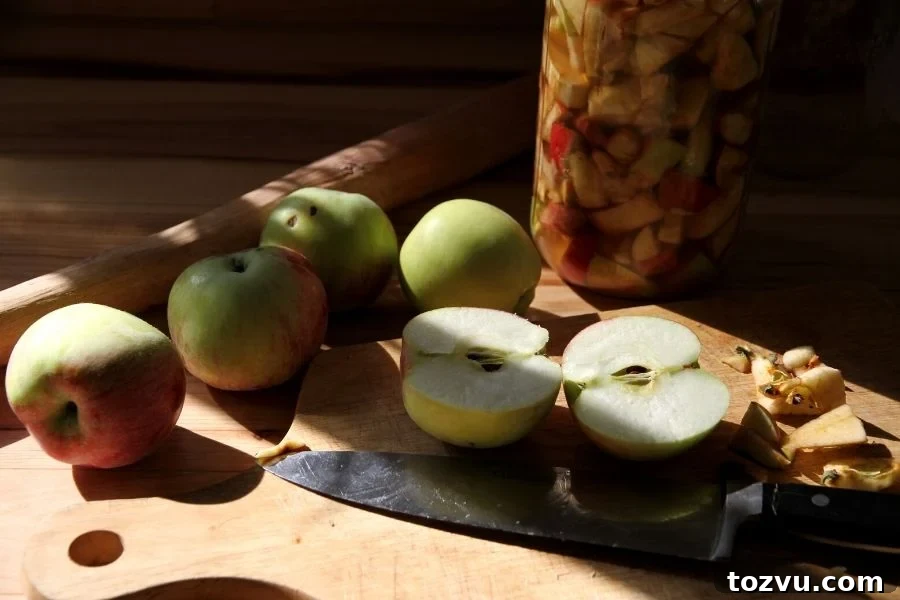
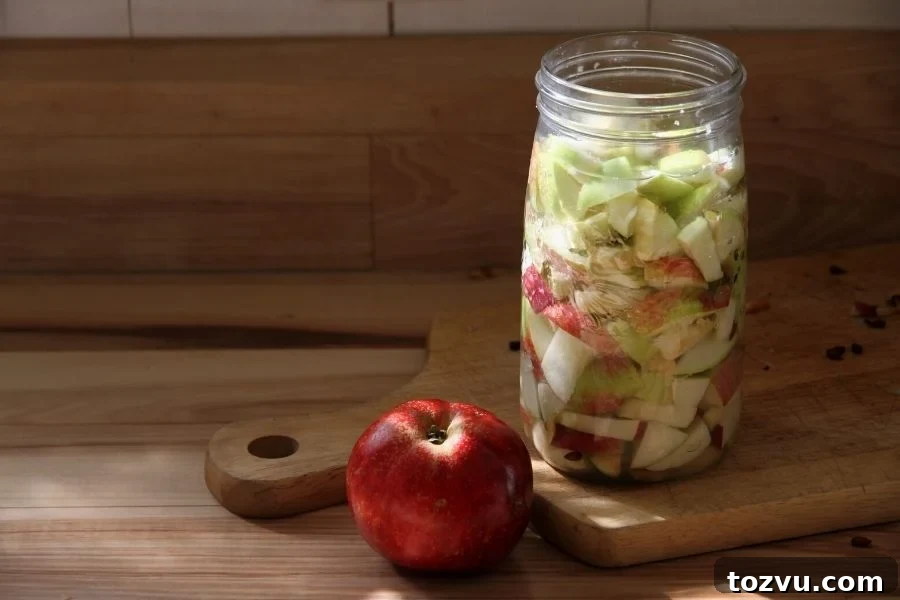
Rinse your apples, chop them into chunks (you can leave cores and skins on), and pack them into a glass jar until it’s about three-quarters full. Add chlorine-free water so the apples are covered by roughly one inch. Use a butter knife to slide along the jar sides and release trapped air pockets, then seal with a lid.
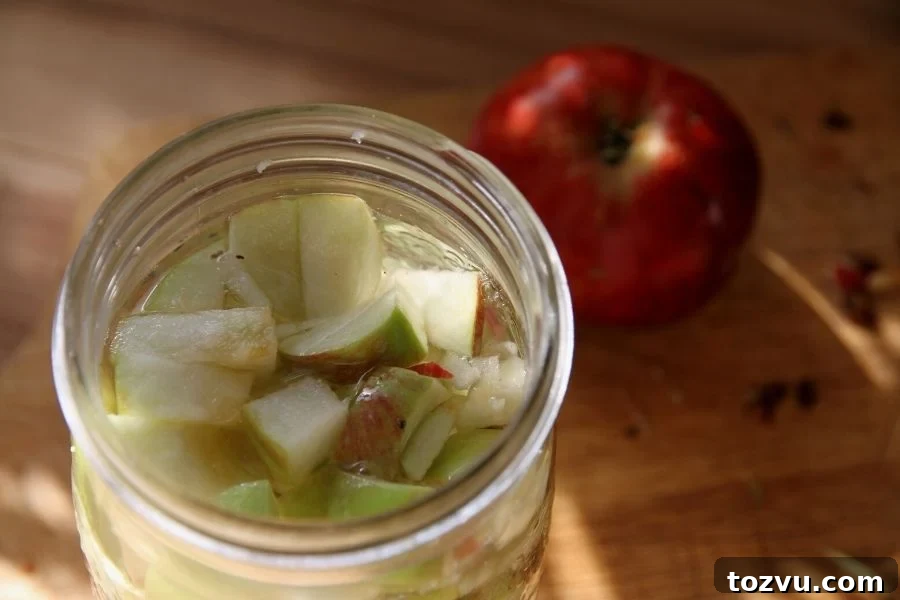
Keep the jar in a visible spot at room temperature and open it once daily to stir or shake gently and to release any built-up carbon dioxide. After 4–10 days the liquid will begin to turn golden and small bubbles will appear on the jar sides—these are signs the juices are ready to be strained.
Strain the infused liquid through a clean cotton cloth into a bowl, gather the cloth corners and let the juice drip until you have a clear apple liquid. This is the juice you’ll ferment into vinegar.
Step 3: Ferment the Apple Juice
Pour your apple juice into a clean glass jar or crock and cover the mouth with a breathable material such as a coffee filter, paper towel, or clean cotton cloth. The cover must allow airflow so natural yeasts and acetobacter can reach the juice, while keeping pests out. Secure it with a rubber band or string to prevent fruit flies from entering.
Store the jar in a stable environment kept between 60–80°F (16–26°C). If it’s too cool, fermentation will be slow or may not start; if too warm, off-flavors and unwanted microbes could spoil the batch.
During the first few weeks you may see tiny bubbles and a faint yeasty smell. Over time the alcohol produced by the yeast will be converted to acetic acid by acetobacter, and the aroma will shift to a sour, vinegar-like scent. Check the ferment periodically. If you see any brown scum or mold, skim it off with a clean stainless-steel spoon and rinse the spoon between each removal.
Step 4: Be Patient — Fermentation Timeline
Fermentation time varies with volume, temperature, and sugar content. As a general guideline, a quart (liter) jar of apple juice typically takes 1.5–2.5 months to become vinegar. Larger volumes take longer: a half-gallon (2 liters) can require 3–4 months, and multi-gallon crocks may take many months. Patience yields better flavor.
Step 5: Watch for the “Mother” Culture
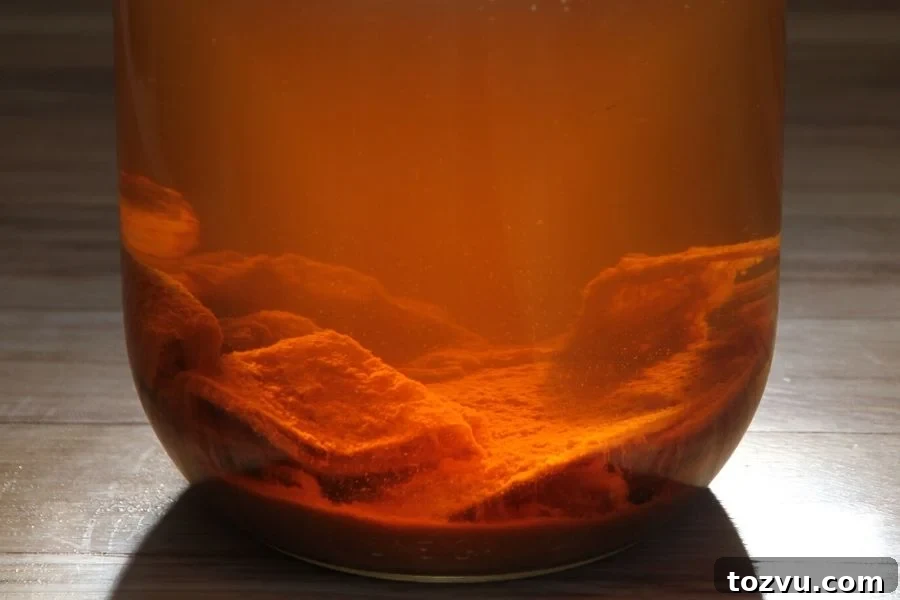
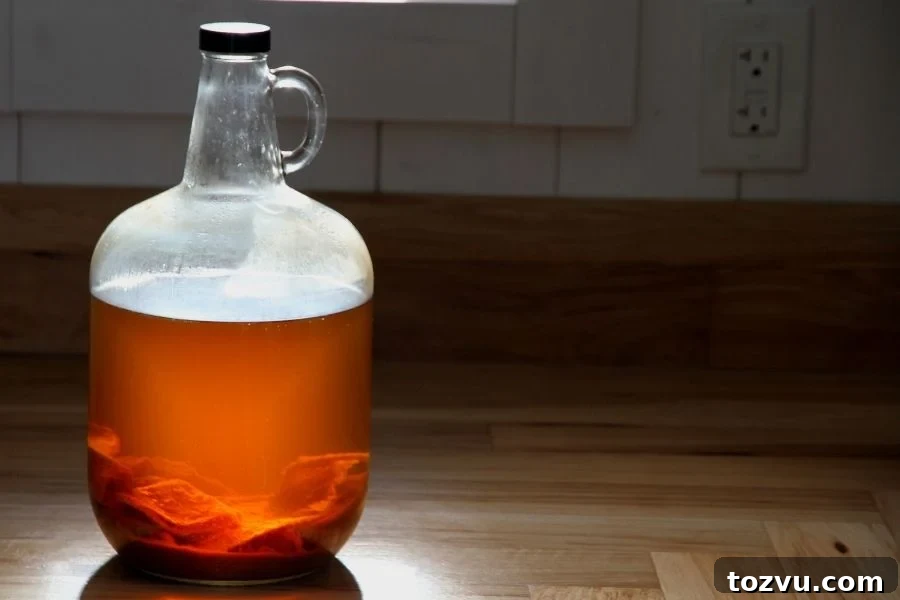
It’s common for a thin, rubbery film to form on the surface during fermentation. This is the vinegar “mother,” a natural cellulose mass produced by acetobacter. It’s harmless and indicates active fermentation. You can leave it in place to protect the surface, discard it if you prefer, or save it to start future batches if it looks healthy (no mold).
Step 6: Test for Stability Before Bottling
There’s no visual clue that tells you precisely when fermentation is complete. When the liquid smells and tastes sufficiently sour, test stability before bottling. Seal 1–2 cups of the vinegar in a clean jar and leave it at room temperature for several days. If gas is released when you open it, fermentation is still active—return it to the main vessel and wait a couple more weeks before testing again. When no gas is released, the vinegar is stable and ready to bottle.
Step 7: Store Your Apple Cider Vinegar
Transfer finished vinegar into glass bottles, jugs, or food-safe containers for storage. Avoid prolonged contact with metal lids or finishes that could be affected by acidity; plastic or cork closures are commonly used for home storage. Store bottles in a pantry, cupboard, or cool cellar. Apple cider vinegar will mellow with time and remains shelf-stable for years.
Important safety note: do not use homemade vinegar for home canning. Proper canning requires a reliable 5% acetic acid concentration, which is difficult to verify at home. Use store-bought vinegar for canning recipes that depend on a specific acidity level.
A Note on Expanding Your Vinegar Skills
Once you’ve mastered apple cider vinegar, you can experiment with other fruit vinegars. There are many traditional recipes and troubleshooting tips available in dedicated guides and books if you want to explore further. Learning the basic process for apples gives you the foundation to adapt and create many flavored vinegars at home.
If you have questions about any step in the process, leave them where you keep your notes or share them with friends who ferment—home fermentation is a practical tradition and a rewarding skill. Enjoy the process and the delicious, homemade apple cider vinegar you’ll create.
Apple Cider Vinegar from Scratch
Instructions
- Harvest apples, rinse and chop into 2-inch chunks.
- Pack apples into a clean glass jar or crock, filling no more than 3/4 full.
- Add chlorine-free water until the apples are covered by about 1 inch.
- Slide a butter knife along the sides of the jar to release air pockets.
- Fasten a lid or cover and set the jar at the back of a kitchen counter.
- Let the jar sit for 4–10 days, breaking the seal and stirring or shaking daily.
- When the liquid turns golden and you see small bubbles, strain the solids out.
- Line a bowl with a cotton cloth and pour the jar’s contents into it to filter the juice.
- Tie the cloth corners and hang so the juice can drip into the bowl below.
- Pour the collected juice into a clean jar or crock for the vinegar ferment.
- Cover with a breathable cloth, paper towel, or coffee filter and secure to keep fruit flies out.
- Keep the jar at room temperature for 2–4 months, checking periodically for mold and skimming if necessary.
- When the liquid smells strongly of vinegar, seal 1–2 cups in a second jar and leave it at room temperature for a few days to test for gas release.
- If gas releases, return the sample to the main container and let it ferment longer; retest after 2–3 weeks.
- When no gas is released on testing, your vinegar is ready to bottle.
- Fill jars, jugs, or bottles and seal. For best flavor, use your vinegar within a year, though it will remain usable for longer.