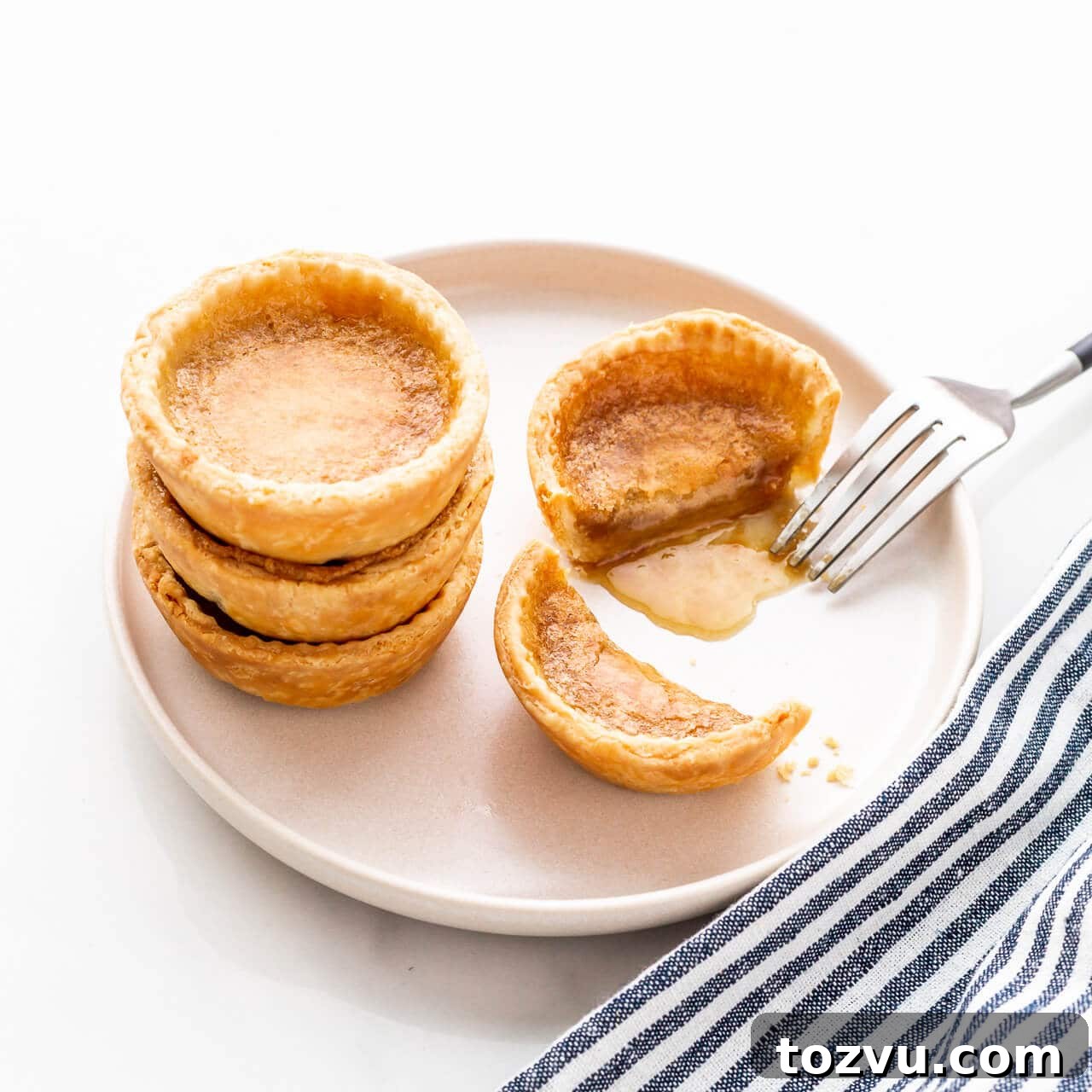
Learn how to make perfect butter tarts with this no-fail recipe. Below you’ll find everything you need to know about making an all-butter pastry dough from scratch, whether to grease the muffin pan, tips to ensure the crust is fully baked, why the filling may crystallize and how to avoid it, plus complete recipes for both the all-butter pastry crust and a classic butter tart filling without corn syrup.
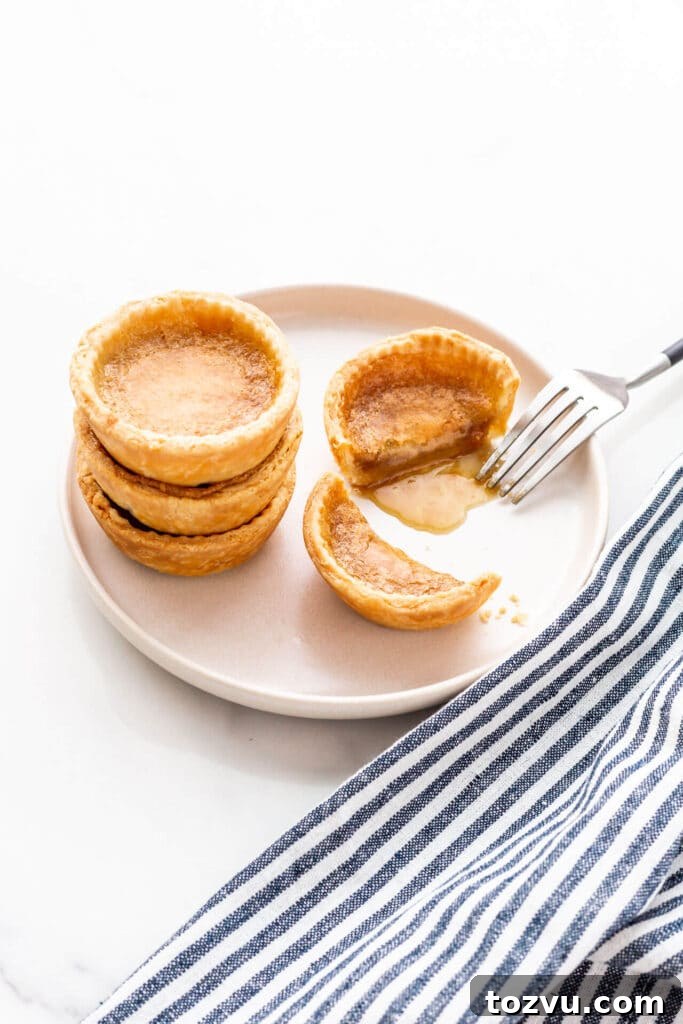
Like many Canadians, I love butter tarts. The filling is sweet with brown sugar and often develops a thin, dribbly syrup layer under a slightly crunchy top as it bakes. Paired with an all-butter crust, the result is flaky and rich, the kind of tart you want to make again and again.
Butter tarts are a classic Canadian treat. They can be a little tricky to perfect, but with some attention to technique you can reliably produce beautiful tarts that don’t stick, don’t overflow, and have a pleasing texture. This no-fail method addresses common problems:
- The baking method ensures tart shells are baked through and not raw, gummy, or greasy on the bottom.
- The filling is measured and baked to minimize overflow, giving the tarts a neat appearance.
- The tarts are easy to unmold because the filling doesn’t bubble over and glue them to the pan.
- This filling does not rely on corn syrup yet remains slightly gooey and silky.
What You Need To Make Canadian Butter Tarts
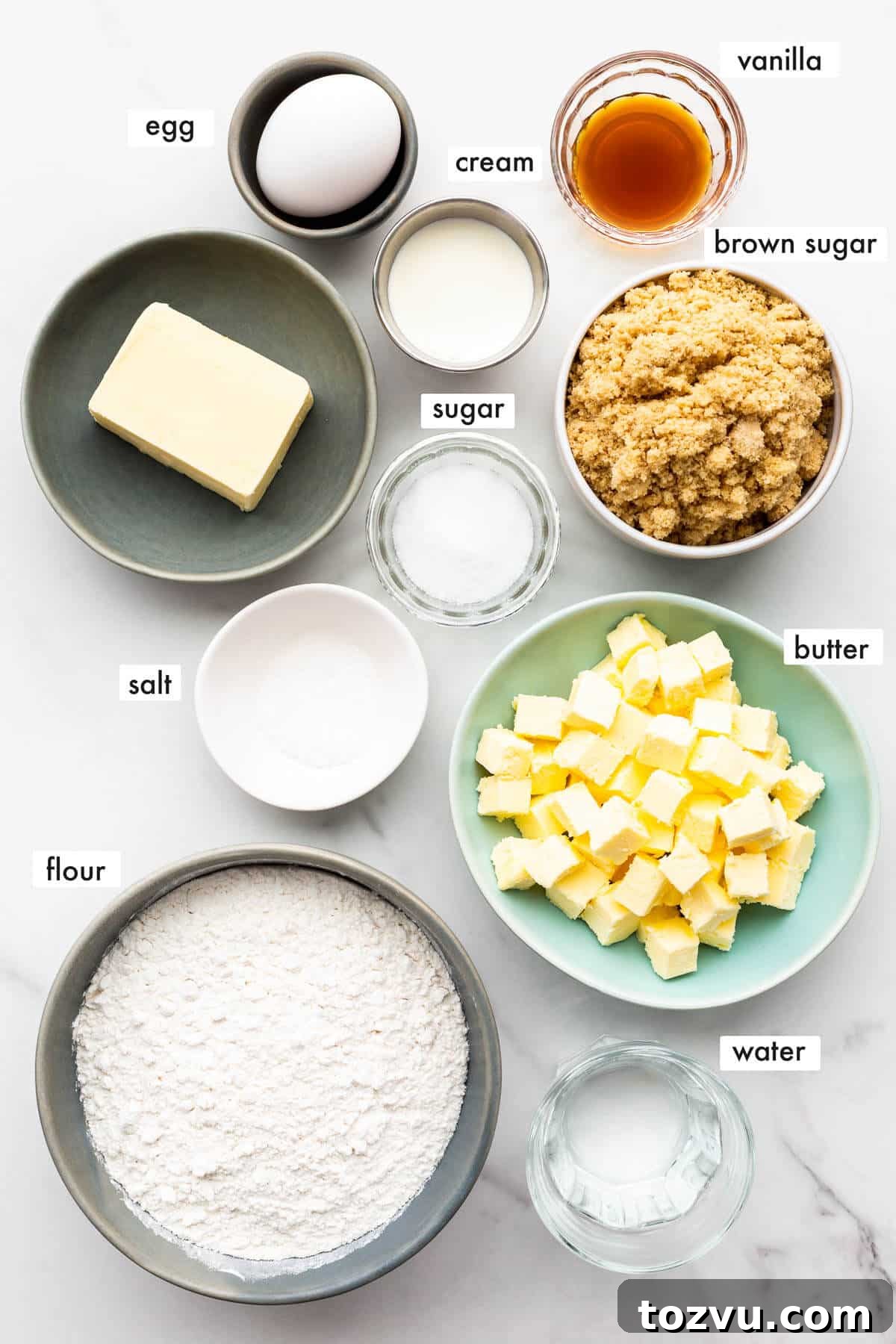
Some bakers add a little vinegar to pie dough to reduce gluten development and yield a more tender crust. It’s optional; if you’ve had trouble with tough crusts in the past, try a teaspoon of vinegar mixed with the water. Otherwise the recipe below will produce a tender, flaky all-butter crust without it.
Getting the butter tart filling just right
Preferences vary: some people love a very runny, gooey center while others prefer a more set filling. Raisins, currants, or nuts are a matter of taste, too. Below are common filling variations and how they affect the outcome:
- Corn syrup: Some recipes include corn syrup to reduce crystallization and keep the filling silky. A small amount helps because it introduces a sugar that resists forming sucrose crystals.
- Vinegar or lemon juice: A bit of acid can reduce crystallization by breaking down sucrose into invert sugars, which helps the filling stay smooth. If you’re avoiding corn syrup, a teaspoon of vinegar or lemon juice is an alternative.
- Maple syrup: Adds flavor but doesn’t prevent crystallization. Replacing part of the brown sugar with maple syrup will produce a looser, more fluid center.
- Dark vs light brown sugar: Both work. Light brown sugar gives a milder flavour while dark brown sugar adds deeper molasses notes.
How To Make Perfect Butter Tarts
I prefer making the all-butter crust by hand, but you can also use a food processor or stand mixer if you prefer. The technique is the same: keep the butter cold, work quickly, and chill the dough before shaping.
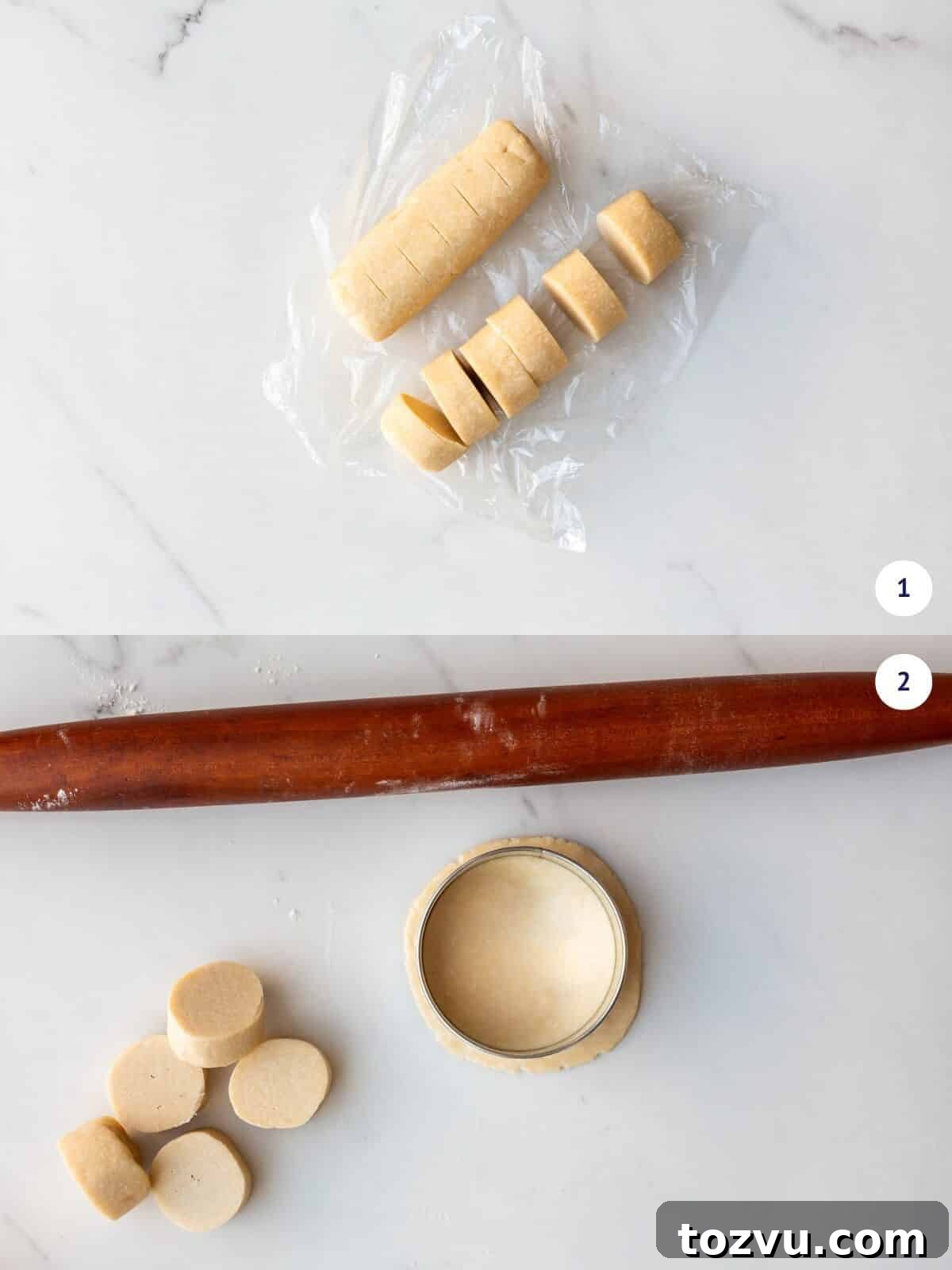
Step 1 — Shape the dough into two logs to make dividing and rolling easier. Roll each piece into a thin disk and use a round cutter to trim and neaten the edges. I roll the dough to about 3/16″ thick. That thickness keeps the crust sturdy enough to hold the filling without being doughy.
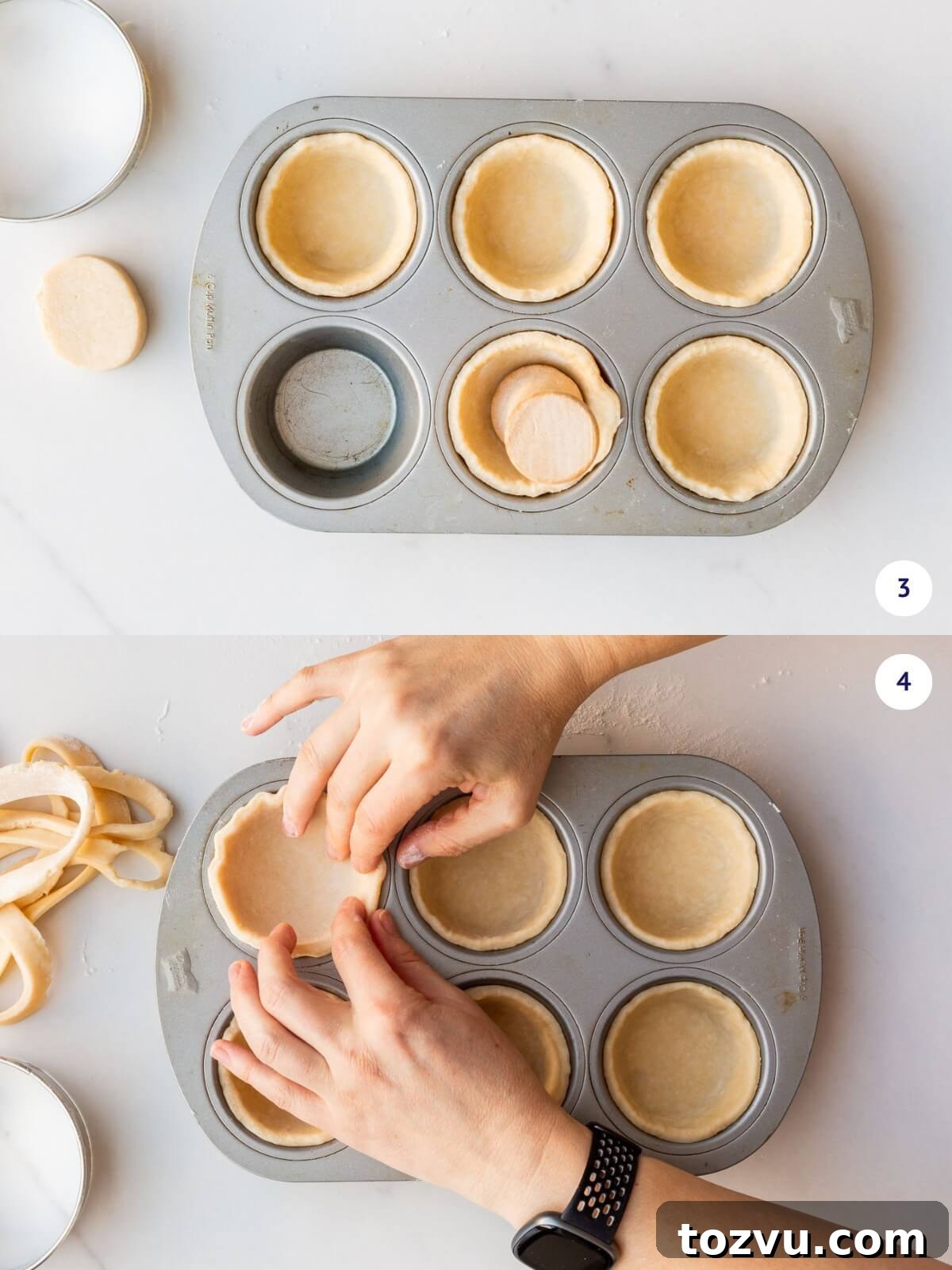
Step 2 — Fit each disk into the cup of a standard muffin pan either with a tamper or your fingertips. Working with cold dough makes this easier; if the dough softens, chill it until firm.
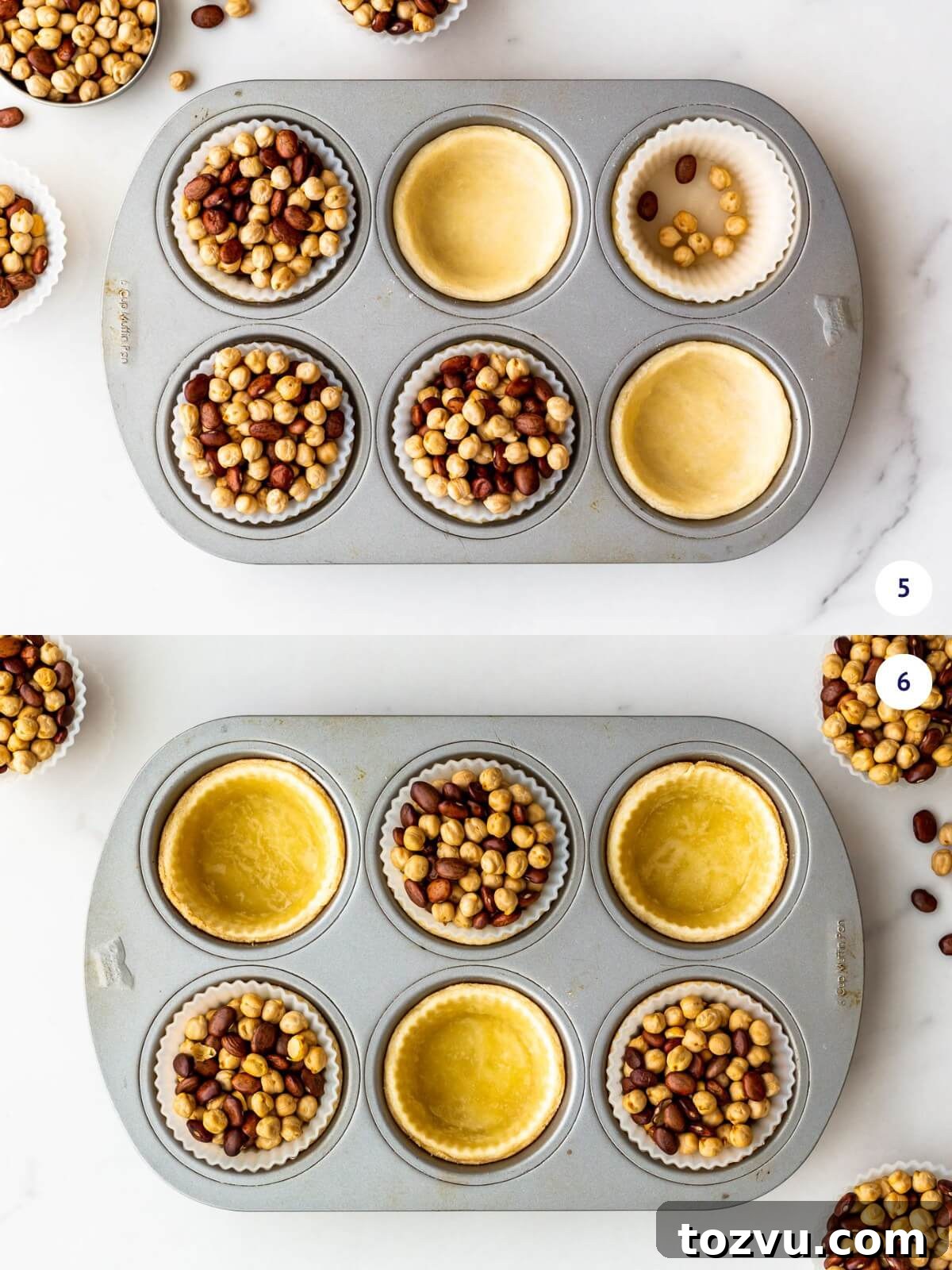
Step 3 — Par-bake (blind-bake) the crusts. Line each shell with a silicone liner or parchment and add dried beans or pie weights, then bake until the shells are dry and beginning to colour. Bake on the bottom rack so the bottoms brown and cook through.
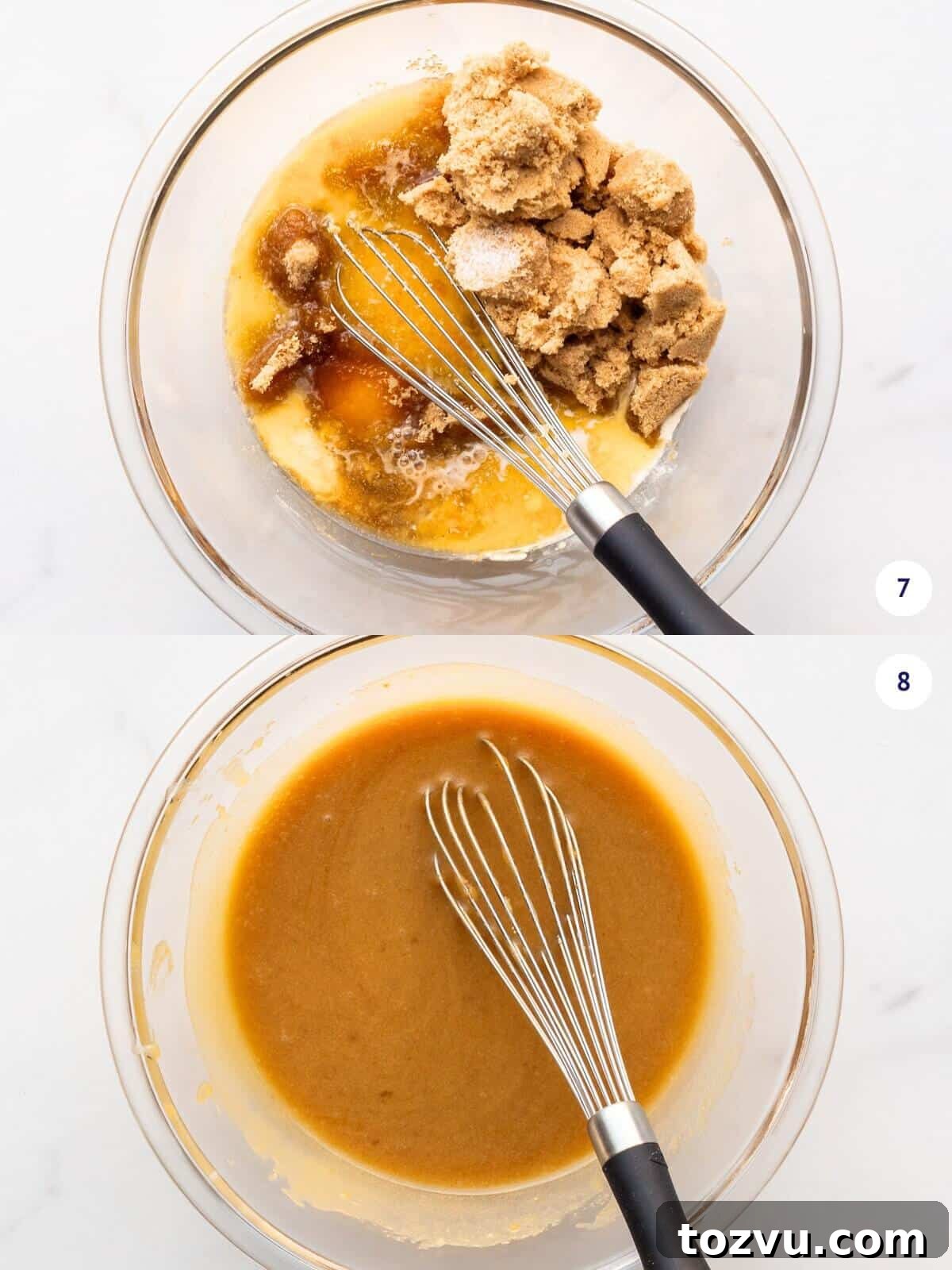
Step 4 — While the shells cool, whisk together the filling ingredients until smooth.
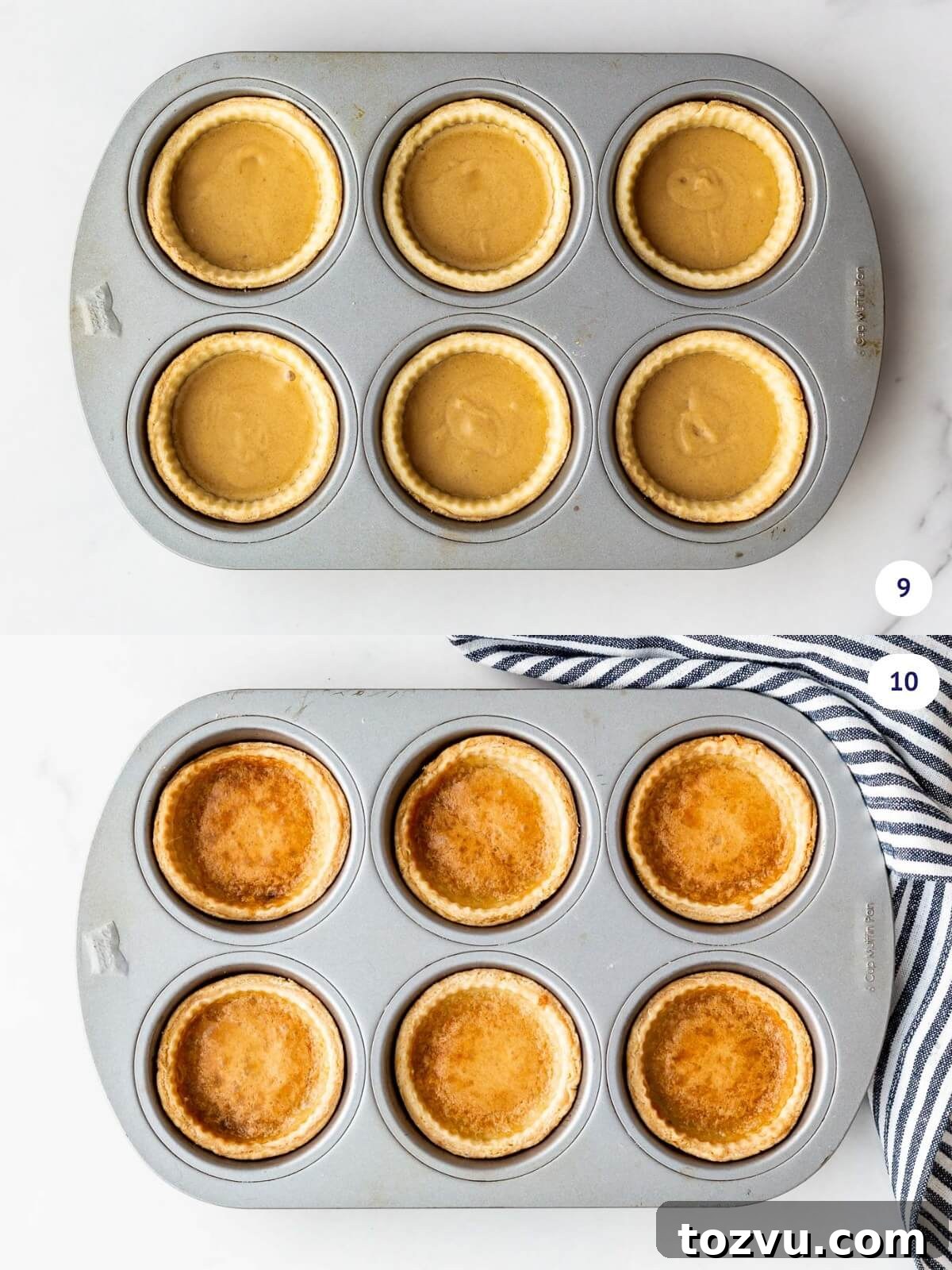
Step 5 — Portion the filling evenly into the par-baked shells (about a ¾ ounce scoop or roughly 30 grams per tart) and bake until the filling has puffed and started to colour but is not violently boiling or overflowing.
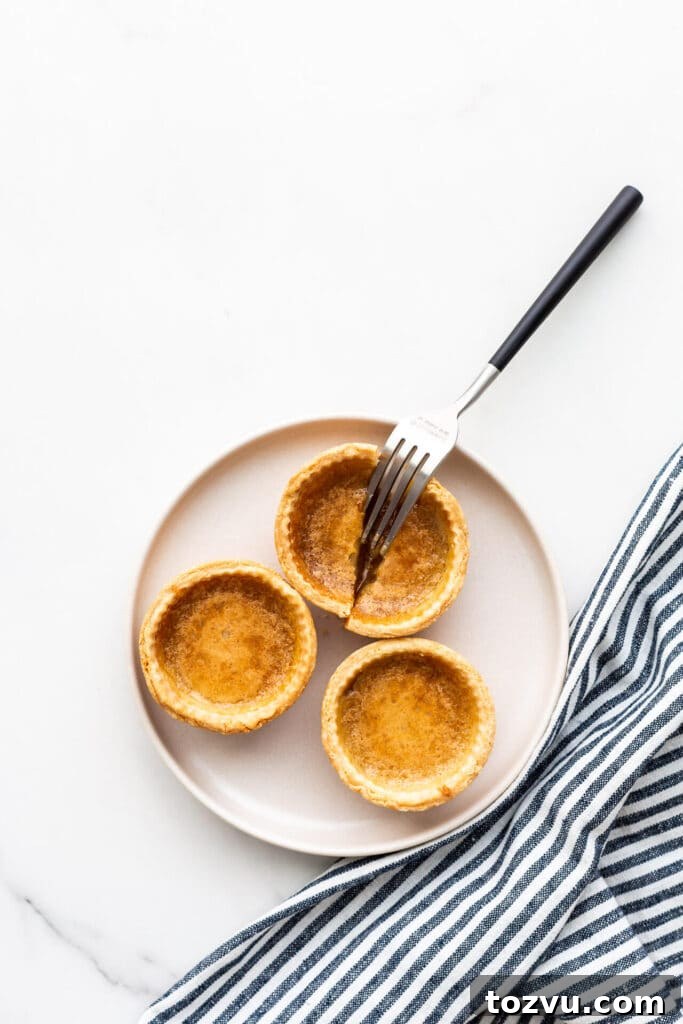
Top Butter Tart Baking Tip
Do not unmold the tarts until they are completely cool. After removing them from the oven, let them rest briefly and give each tart a gentle twist about five minutes after baking to check for sticking. If you try to remove a warm tart, the crust may break. Once fully cooled, slide a thin palette or paring knife around the edge and lift gently to remove the tart.
Butter Tart FAQs
The filling contains a lot of sucrose, which tends to crystallize. To reduce crystallization, add a small amount of corn syrup (even a tablespoon helps) or a teaspoon of vinegar or lemon juice; the acidity creates invert sugars that resist crystal formation. Also avoid over-baking the filling. Par-baking the shells and then briefly finishing the filled tarts helps prevent the filling from boiling and crystallizing.
How do you get them out of the muffin pan?
Let the tarts cool for a few minutes after baking to firm up a little. Gently twist each tart in its cup to loosen the sides. Once completely cooled, use your fingertips or a thin spatula to coax each tart from the pan. Patience is key—rushing this step increases the chance of breakage.
Do you grease the muffin pan for butter tarts?
For tart pans you usually don’t need grease. After testing with greased and ungreased muffin pans and with parchment rounds, greasing didn’t help and sometimes made unmolding harder. I recommend using ungreased pans and relying on proper chilling and par-baking so the tarts release cleanly.
Do you need to store them in the fridge?
Butter tarts keep well at room temperature for a few days if stored in an airtight container once fully cooled. I usually keep half at room temperature for a few days and freeze the rest for longer storage.
Can you freeze them?
Yes. Cool completely on a rack, freeze on a sheet until solid, then transfer to a sealed freezer bag. Many people enjoy eating them straight from the freezer.
How do you defrost frozen butter tarts?
Defrost at room temperature on a plate or sheet pan for one to two hours.
Below is a clear recipe for both the all-butter crust and the classic no-corn-syrup filling. This recipe yields 12 standard-size butter tarts baked in a muffin pan.
Recipe — Butter Tarts with All-Butter Crust
Author: Janice Lawandi
Yield: 12 tarts
Prep time: 25 minutes (plus 1 hour chill) • Cook time: about 20–25 minutes
All-butter crust
- 280 g bleached all-purpose flour
- 10 mL granulated sugar
- 5 mL fine kosher salt (or use half the amount if using table salt)
- 155 g unsalted butter, very cold, cut into small cubes
- 85 mL cold water (add 1 tsp vinegar optionally)
Filling
- 80 g unsalted butter, melted
- 200 g light brown sugar
- 30 mL whipping cream (35% fat)
- 5 mL pure vanilla extract
- 1.25 mL fine kosher salt
- 1 large egg
- Optional: up to ½ cup total raisins, dried currants, or toasted nuts
Make the pastry shells
- In a large bowl, whisk together flour, sugar, and salt. Toss the cubed cold butter in the flour to coat.
- Using your fingertips and palms, rub the butter into the flour until the mixture is coarse and sandy, with pea-sized pieces of butter remaining.
- Sprinkle with the cold water and, if using, vinegar. Mix with a fork, then work quickly by hand until a smooth dough forms.
- Divide into two, form into logs, wrap, and chill at least 1 hour.
- Divide each log into six pieces. Roll each into a roughly 4-inch circle and fit into the wells of a 12-cup muffin pan.
- Chill the shaped shells in the fridge at least 15 minutes while you preheat the oven to 400°F (200°C).
- When very cold, line each shell with a silicone liner or parchment and fill with dried beans or pie weights. Bake on the bottom rack for about 20 minutes until the edges are dry and beginning to brown. Remove, cool slightly, and remove weights and liners.
Make the filling and finish
- Reduce oven temperature to 375°F (190°C).
- In a medium bowl, stir together melted butter, brown sugar, cream, vanilla, salt, and the egg until smooth.
- If using raisins or nuts, place a few in the bottom of each par-baked crust.
- Divide the filling among the shells (about 30 g per tart). Bake on the middle rack for about 15 minutes until the edges of the crust are golden and the filling is puffed but not violently boiling.
- Remove from oven and let cool for about 5 minutes, gently twist to check for release, then let cool completely before unmolding with a thin spatula.
Notes
- If substituting table salt for kosher salt, use about half the listed salt to avoid over-salting.
- Raisins, currants, or nuts are optional—use up to ½ cup total if you like them included.
- To reduce the chance of crystallization, add a teaspoon of vinegar or a small amount of corn syrup, or avoid overcooking the filling.
Nutrition (approx.)
Calories per tart: about 330 kcal. Carbohydrate ~37 g, Protein ~3 g, Fat ~19 g, Saturated fat ~12 g, Sugar ~18 g. Nutrition is approximate and provided as a guideline.
Follow these steps and tips for reliable, delicious butter tarts with a flaky all-butter crust and a classic, slightly gooey filling—no corn syrup required.